Caltha palustris
Marsh marigold
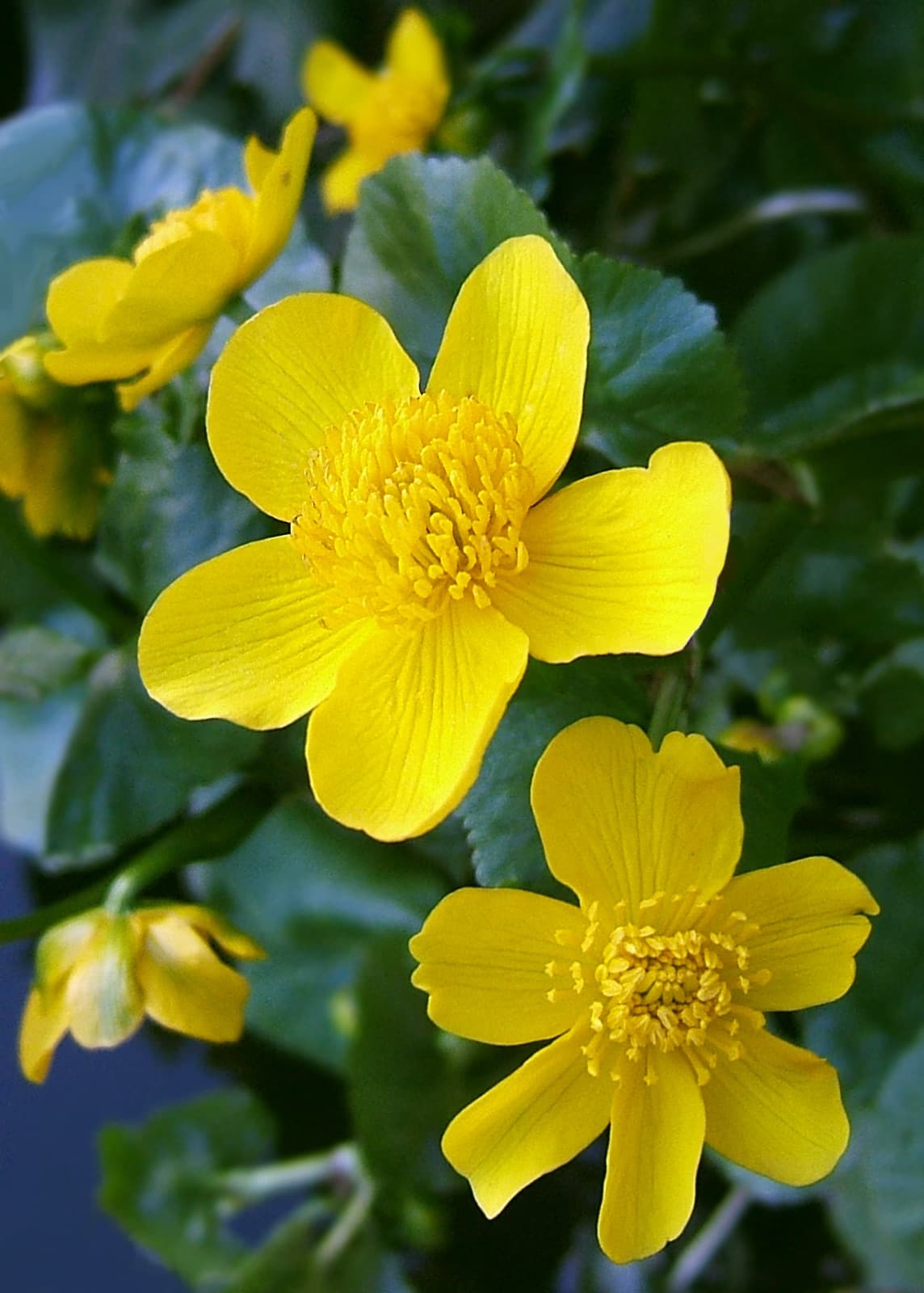
How do you recognise marsh marigold?
The leaves are leathery with crenate or finely toothed edges. The basal leaf is roundish with a heart-shaped base, the stem leaves kidney-shaped, and the blade is 3–20 cm across. The flowers are glossy yellow, 2–5 cm wide, usually with five petals.
What is it confused with?
A coltsfoot head is made of hundreds of tiny flowers, while a marsh marigold flower has five separate glossy petals. Marsh marigold also grows only in wet places.
Where does marsh marigold grow, and when does it flower?
Marsh marigold grows in fertile wet ground: mires, ditches, along streams, on wet meadows, at bog edges, and in lakeshore vegetation. Flowering is in May and June, and as late as August in the north.
Can you collect it for a herbarium?
Marsh marigold is common in wet places. One flowering shoot is enough, but wash your hands after collecting. Poisonous. Look, do not touch.
Did you know?
The glossy petals reflect sunlight into the centre of the flower, warming it and drawing pollinators in a cool spring. It is among the most striking wetland plants of the season.
Where does marsh marigold grow in Finland?
The map shows where the species has been recorded. Darker squares mean more observations.
Loading the map
Observations: GBIF · Map: CARTO, OpenStreetMap
Sources: fi.wikipedia.org
Identify plants with your phone
Linnea identifies a plant from a photo and tells you its name and its story. Every find takes its own numbered place in your herbarium, with the day and the town where you found it.